
54
9
Facebook
3
10
Guest

Government, the Dinosaur, and Finding the Fish

By: Guest | May 31, 2012 | 
28

Today’s guest post is written by Ken Mueller.

Quick, go get your daily newspaper (you subscribe, right?).

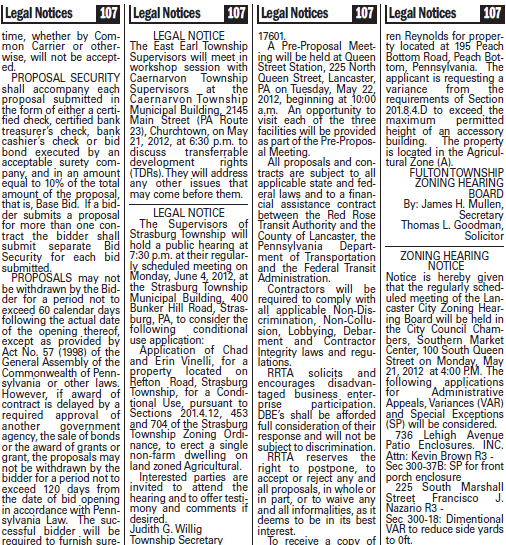
Now flip to the back section…the classifieds, and look for the part labeled something along the lines of “legal notices.” I’ll wait.

Ok, now you should see a lot of legal mumbo jumbo in small print about your local city or township having a public meeting to discuss budgetary matters and what-not.

You check that section of the paper every day, right?

Well, believe it or not, government bodies are required by law to pay for those notices.  Here in Pennsylvania, the state code says “public notice must be given for all public meetings” and in most states there are guidelines that dictate such notice should be done via “a newspaper of general circulation.”

The idea is, by publishing the notice in the newspaper, the legislative body in question can’t get away with making decisions behind closed doors. But really, when’s the last time you ever thought to look in the legal notices in a newspaper to stay informed? And what, exactly, is a newspaper of “general circulation” anymore?

One of my clients is a very small township of just more than 5,000 residents. Money is tight for everyone, especially government bodies, and this particular township is required by law to spend about $14,000 a year on advertising. Not a lot of money in the grand scheme of things, but translate that to a major city like Philadelphia or Chicago, and just imagine how much they are required to spend.  As well, the large majority of newspapers are seeing declines in subscriptions.

Let’s do the math:

  • Government bodies have fewer dollars to spend
  • Fewer people are reading the newspaper

And yet they are still required to spend the money on newspapers to notify the public.

One of the rules of marketing is,

“Fish where the fish are.”

If the goal is to notify the general public of meetings, perhaps it’s time for legislative bodies to get on board with this whole online, digital thing.

Total newspaper circulation in the U.S. is estimated at about 48 million (and declining) while Facebook use in the U.S. now stands at more than 157 million (and growing). More than 239 million Americans have Internet access.

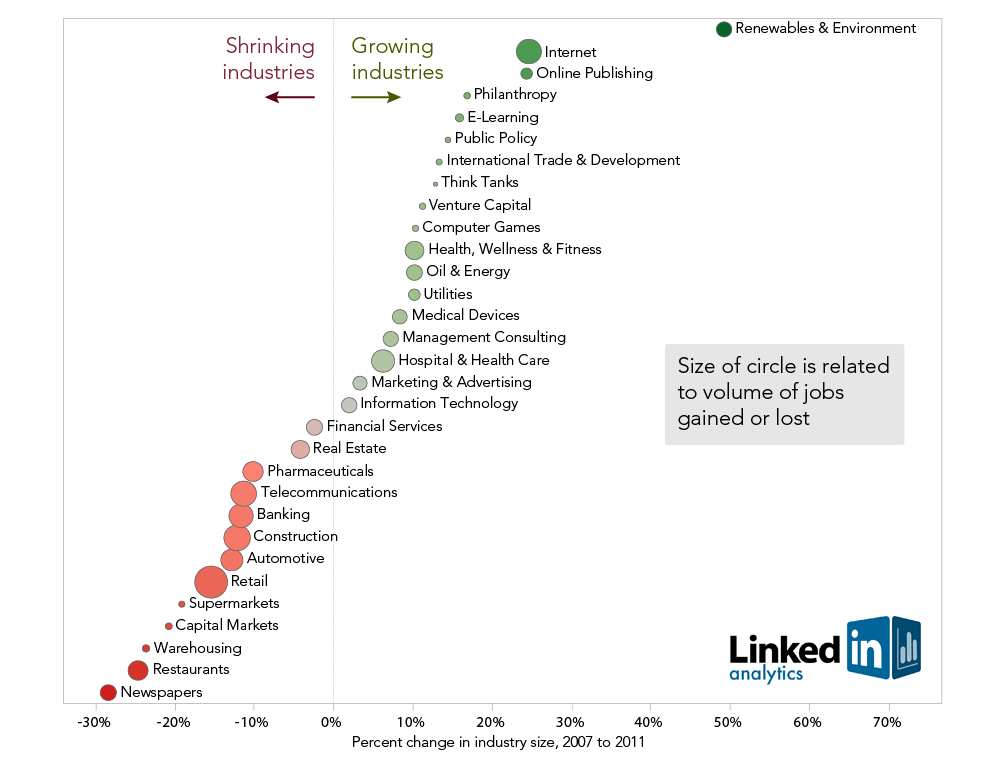
A recent Council of Economic Advisors analysis of LinkedIn trends shows that, while the Internet and online publishing are among the fastest growing industries in the U.S., newspapers are the fastest shrinking industry in the country.
Wouldn’t it make more sense for states to allow local governments to use their online properties such as websites and Facebook, to reach more people while cutting back on spending?

Yes, I know I’m asking for common sense to reign in a realm where common sense is in short supply. And I also know the newspaper industry would fight such a change for fear of losing a large chunk of easy revenue. But now is the time for change. Citizens have greater access to online properties, and the Internet and social media offer greater avenues for participation within the government process. Sadly, governments, like newspapers, are slow to change.

Seems to me if you really want to hide something from the public, the legal notices of the newspaper might just be the place to be.

What are your thoughts? Is it time we unshackle our government bodies from the heavy yoke of mandated print advertising? Do you agree that putting these types of legal notifications online would actually enhance participation in local government?

Ken Mueller combines his 30 years of experience in the media industry at Inkling Media. Follow him on Twitter @kmueller62

NP5G9VS73GCF

28 comments
Papun
Papun

You do what you do now with the internet, only faster! We're talking up to 250 times faster than your dial-up modem and up to 5 times faster than your DSL!

ginidietrich
ginidietrich

@kmueller62 Did you see @bdorman264 asked if you were the dinosaur?

kmueller62
kmueller62

@ginidietrich @bdorman264 yeah. he's a punk like that. he'll be old someday, too

kmueller62
kmueller62

@ShakirahDawud haha, i love the way you put that!

bdorman264
bdorman264 like.author.displayName like.author.displayName 2 Like

Hey, don't be the wet blanket on subsidized economic development in your community; that's your tax dollars at work.


I do subscribe to the local paper and read it most days, but I'm old school like that. The public notices they do however really do seem a huge waste of resources and that money could certainly be used to keeping your library open, another policeman on the beat, making sure your trash is getting picked up, there are no pot holes in your road, etc,etc,etc. 


Good point, we are looking to you to start the movement; especially now that you have the social platform to shout if from the rooftops...........:)

KenMueller
KenMueller like.author.displayName like.author.displayName 2 Like

 @bdorman264 Ha, I'm not ready to take on that challenge. Others have tried and the newspaper industry has lobbied hard to maintain the status quo, at least here in PA. they have deeper pockets than I do, that's for sure. 


jasonkonopinski
jasonkonopinski like.author.displayName 1 Like

Public notices are required by the Sunshine Act, and while I agree that mandated print advertising is a bit draconian, I think you're missing some of the details as to why newspapers are the preferred distribution vehicle for public notices. I highly doubt that a $14K advertising budget is consumed entirely by filing public notices and suggesting otherwise is more than a bit disingenuous. 


A public notice must, by law, be (a) published by an independent third party authority; (b) permanently archivable; (c) easily accessible and (d) easily verifiable that the notice hasn't been altered since publication. 


In every community in which I've ever lived, public notices were not only printed via the local papers but also posted on the township/muncipality website, distributed via print newsletter and postage mailers. 


Latest blog post: The Story Still Being Written

ginidietrich
ginidietrich moderator like.author.displayName like.author.displayName 2 Like

 @jasonkonopinski OK you guys have clearly had this out, but I have something to say! I think the point is not that they money is being spent or that it's the law to print it, but in the way they do it. If newspapers are declining and readership is, too. Why not spend that money more efficiently and still get the word out?

jasonkonopinski
jasonkonopinski

 @ginidietrich @KenMueller Oh, I'm totally onboard with that. The law is somewhat draconian and certainly processes can be improved upon, but I'm just not seeing any initiatives at the state or local level to change the law.  Anecdotally, I see just about every single one of our neighbors gets the dead-tree edition of the local newspaper delivered daily. My FIL has been a subscriber for at least 30 years, despite spending a fair bit of time consuming content online. Now, that same newspaper has a horribly implemented paywall, but subscriber numbers seem to be holding steady.


Local newspapers have the trust of the community (by and large), something that hasn't yet been fully realized by digital.  

Latest blog post: The Story Still Being Written

KenMueller
KenMueller

 @jasonkonopinski That $14k was exactly what they spent on public notices alone, as reported to me by this township, so my number is correct. And I have the printed copy of the law for PA State townships and municipalities in front of me, and it requires that it be in a newspaper of general circulation. That's the law here in PA, as it is worded. Those other things are not required, nor hinted at, other than having them available on premises during public hours. 

jasonkonopinski
jasonkonopinski

 @KenMueller And I'm not disputing the way the law is written, only providing details as to why a "newspaper of general circulation" is required. To receive that classification, newspapers must have a certain number of paid subscribers, exist for a minimum number of years of continuous operation and contain a certain percentage of news.  


As to the $14K, the way your post is written suggested to me that it was the *entire* advertising budget (though I wouldn't necessarily call public notices advertising, per se).  

Latest blog post: The Story Still Being Written

KenMueller
KenMueller like.author.displayName 1 Like

 @jasonkonopinski Yes, it is an operational expense. But ask any government official, and I bet they could use that number, no matter how small or large, elsewhere. 


And I don't see any indication either, which is the point of this post. Just because it's been done one way in the past, no matter how many years of tradition, that is not a reason to continue. And I'm not calling for a kneejerk switch. Clearly, anything that is done needs to be thought out carefully. 


This particular municipality does their due diligence, but for years had trouble getting anyone other than 4 or 5 regulars out to their meetings. Now, with social media, use, they are getting a much higher number. They WANT participation from the citizenry. 


And certainly I'm differentiating between magazines and newspapers. Magazines have their own set of issues, and the digital side of that is a big part of that as well. 

jasonkonopinski
jasonkonopinski like.author.displayName 1 Like

 @KenMueller In my mind, that state-mandated advertising is an operational expense and translates into a fairly insignificant number compared to the total budget for the township.  Could it be done differently? Sure. But I don't see any indication that the Commonwealth is moving in that direction right now.  


The local newspaper as an institution continues to be *the* source for news and information within many communities - and there's nearly 200 years of reputation behind that with regard to public notices. 


I think we should also differentiate between newspaper and magazine when talking about print. I'd bet that local lifestyle magazines like FLL, Susquehanna Style & FIG aren't having any problem filling their pages with advertising partners while the percentage of editorial content to ads continues to remain fairly consistent overall. How that scales nationally? Hard to say. I do know that brands that can continue to run full-page ads in national publications with high readership at six figures per issue aren't falling away. 

Latest blog post: The Story Still Being Written

KenMueller
KenMueller

 @jasonkonopinski No, not prohibited. I just find the requirements to be constrictive and cost prohibitive in a time when money is tight for municipalities. There are digital time stamps that can be used, and archiving, well, it all stays there and can be required. Even if it were as simple as time stamped PDFs being put online. 


I think the idea of making things public via sunshine laws is somewhat defeated when the subscription numbers are far below previous levels, and well below Internet usage. 


And print, as print, if you separate it from online, I think is dying. But we'll have to agree to disagree on that. 

jasonkonopinski
jasonkonopinski

 @KenMueller Understood.  


In any case, municipalities aren't *prohibited* from using digital distribution methods for public notices, but I'm curious to see how the laws may be revised to vet digital publications. That's the real sticky wicket here - it's the archiving and verification that digital hasn't satisfied. 


Print is certainly changing, but it certainly isn't dying in my eyes. 

Latest blog post: The Story Still Being Written

ClayMorgan
ClayMorgan like.author.displayName 1 Like

Caveat - I'm a newspaper publisher and may be the only defender of newspapers here.


On April 25, 2012, the Newspaper Association of American reported yet more growth in newspaper ONLINE readership - a 4.4 percent year over year increase to 113 million unique visitors. There was also a 10 percent increase in adult average daily visitors to newspaper websites.


This analysis was conducted by comScore.


I believe this number continues year over year growth for a simple reason - the local paper remains the number one source of local news and information available. And it is providing that news and information in print and online. That includes legal notices and public notices, which many, if not most, newspapers are putting the notices on their websites.


When calculating readers, you can't just look at print circulation. And in a lot of communities, these notices are already online, using solutions provided by the newspaper and state press associations.


Furthermore, the Audit Bureau of Circulation in May reported increases in newspaper circulation, including 5 percent on Sundays, which contradicts the statement, "Total newspaper circulation in the U.S. is estimated at about 48 million (and declining)."


And does your 48 million include the more than 8,000 free distribution papers, weeklies, niche publications (such as business journals)?


My concern? Citing print circulation simply doesn't tell the whole story of newspapers.

Latest blog post: Livefyre Conversation

KenMueller
KenMueller like.author.displayName 1 Like

 @ClayMorgan Thanks for weighing in, Clay. I agree that we need to look at all the numbers, but for the purposes of the law, here in Pennsylvania at least, online is not considered an option. It has to appear in the print paper, and the free weeklies are also precluded from these laws, as they are not considered "general circulation" by the state. 


I haven't seen those numbers you mention, but my numbers were taken from the Audit Bureau as well, that indicated a large number of newspaper closings in recent years and also decreases in all of the top 25 papers, with the exception of the WSJ.  I will go and check out those new numbers (this post was written before those were released). 

ClayMorgan
ClayMorgan

 @KenMueller Some of that is paid digital subscriptions, some of it is print bundled with.


In Tennessee, every time the subject comes up, it is "we'll put it online." Our response is a simple, "it is already online."  We're not required to put it there, but we do as we know that's the way things are going.

Latest blog post: Livefyre Conversation

KenMueller
KenMueller like.author.displayName 1 Like

 @ClayMorgan Clearly the print industry is in serious flux. We used to have two daily papers that were merged into one awhile back, which still has a decreasing circulation. They are trying the paywall thing, which isn't working out very well for them. I think people are used to getting things for free on the web, which makes it hard for newspapers. It's a real challenge! The same goes for radio, which is my background. Learning how to monetize that is incredibly difficult, and I don't envy those of you in that position. 


"Old" media is working hard to get there, but it's a slow process, with the users fighting along the way. 

John Fitzgerald
John Fitzgerald

Side note: How many millions are poured into giving the public access to TV "airwaves" via community access TV? Wouldn't it be cheaper and more effective to give each town their own YouTube channel?

KenMueller
KenMueller

 @fitzternet My background is in broadcasting, and yes, the entire system is outdated. We went through the motions to give access to under-represented groups, and who actually watches those channels? And they can create their own YouTube channel for free. Maybe we use the money to give them their own website, so they don't have to pay for them, even though that can be done cheaply. I would imagine a government created website template or hosting option would end up being run poorly and inefficiently.