TL;DR
This year, I tore apart the thing with my name on it. The PESO Model® Certification has taught thousands of people for more than a decade, and I rebuilt it from the studs anyway—because the old version taught PESO as a framework to understand, and 2026 demands you run it as an operating system.
Inside, you’ll find the two things that genuinely changed in the rebuild (the workbook and worksheets that make the work itself the output, and the licensed PESO OS AI that comes bundled in), the one thing I deliberately didn’t touch, who it’s for, who it isn’t, and how it picks up exactly where your PESO Model Diagnostic score left off.
Key Insights
- The biggest change to the PESO Model® Certification in 12 years isn’t a new module—it’s the premise. The new version teaches you to operate a system, not understand a framework.
- You don’t finish with a binder of notes and good intentions. You finish with the work done: a working PESO plan built worksheet by worksheet—every timed exercise paired with a fully worked example, so you’re never staring at a blank box.
- Owned media alone has eleven structured worksheets. They’re not homework you take home; they’re the work you do inside the course.
- The licensed PESO OS AI—a standalone tool worth about $1,000 a year—is bundled into the certification. You’re not just learning the system; you’re leaving with the thing that runs it.
Inside the PESO Model® Certification
This year, I did something that made my stomach hurt a little bit—and took way, way, WAY more time than I ever expected (cue visuals of me sitting poolside in the Grand Cayman during the holiday season, working on it…every day).
I took the thing I’m best known for—the thing with my name on it, the thing more than 1,400 people across 15 countries have paid for, the thing taught at over 100 universities—and I tore it down to the studs.
I did it on purpose! And my reward for a poolside pina colada was four hours of work on it each day. After I’d been to the gym, of course.
If you’ve ever rebuilt something that was, by every reasonable measure, working just fine, you know what kind of doubt I’m talking about. The little voice that goes, “Who do you think you are? People love this. Leave it alone.”
I didn’t leave it alone.
And I want to tell you why.
This is the final installment of The PESO Model® Operating System series. Six articles ago, I told you that PESO had graduated from a framework into an operating system. Three Diagnostics later (Budweiser, Liquid Death, and Peppa Pig), you can start to see how it works, for the tiniest teams and the biggest, well-funded brands.
Now I’m going to stop describing the system and finally (finally!) show you how to build it.
Why a Framework Wasn’t Enough Anymore
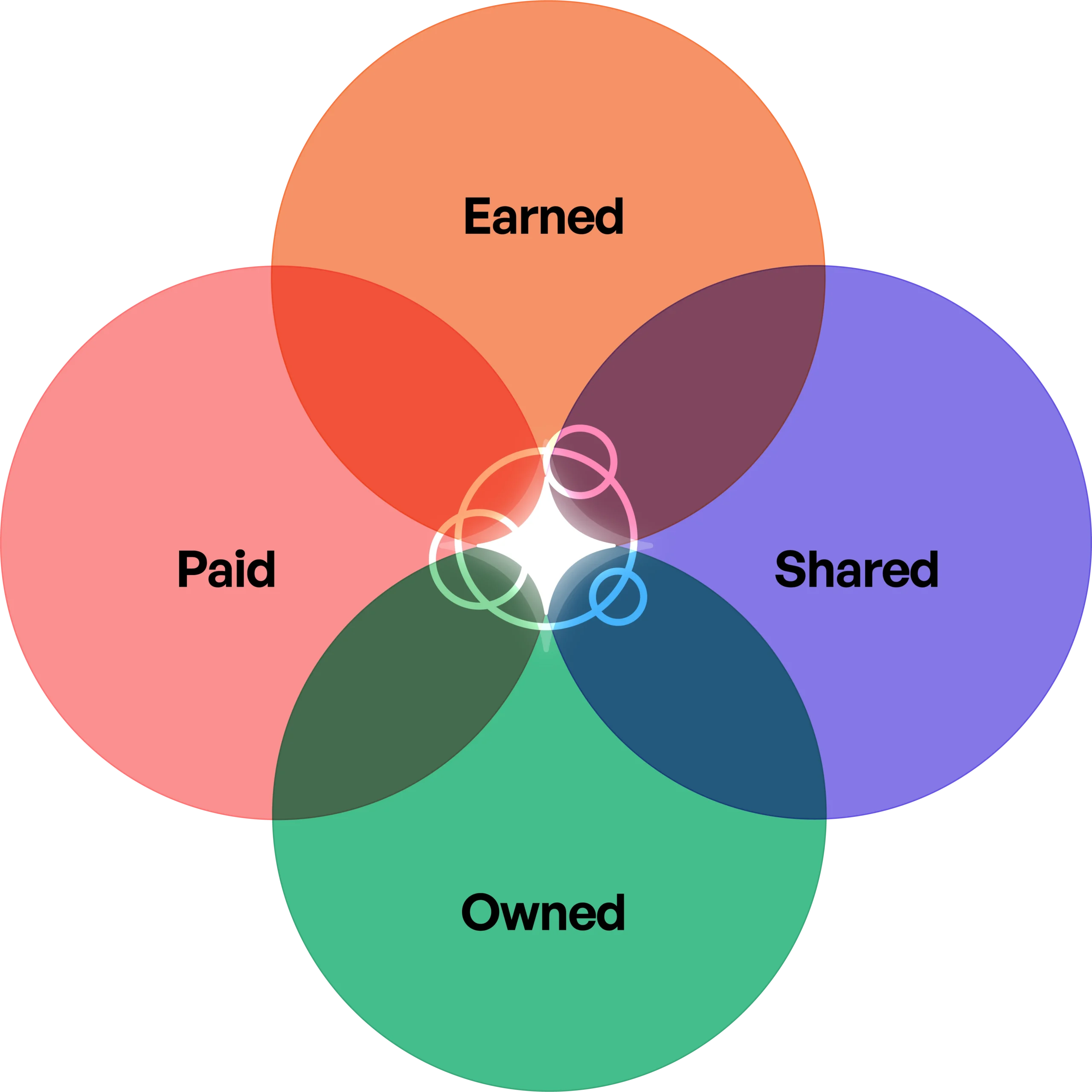
The old PESO Model® Certification was good. Genuinely good. It taught the PESO Model the way I’d taught it for years: here are your four media types—paid, earned, shared, owned—here’s what each one does, here’s how they overlap, here’s how to think about them together.
People finished it smarter. People said, ‘Wow! I didn’t think I could learn anymore about my trade, yet here we are.” They could draw the model, defend it in a meeting, and build a campaign around it.
But “understanding the four media types” is a 2014 skill.
That and, somewhere along the way, the model stopped being a way to think and became a way to operate. The channels stopped being four buckets you fill and became one system that feeds itself.
Owned content gets you cited. Earned validates it. Shared amplifies it. Paid boosts what’s already working. Measurement tells you what to do more of. Round and round it goes, compounding even while you sleep.
That’s not a framework. That’s an operating system.
And you cannot teach someone to run an operating system by explaining its parts. I can explain every component of a car engine to you in beautiful detail, and if you don’t know how to drive, that won’t teach you.
That gap—between understanding PESO and operating it—is the thing the old certification couldn’t close. It taught the engine. It didn’t teach the driving.
So I rebuilt it to teach the driving.
What’s Actually Different in 2026
When I say “rebuilt,” I don’t mean I refreshed the slides and called it new.
(We’ve all bought that course. You know the one.)
I mean, two structural changes, each designed to fix a specific failure of the old way.
The Workbook—and the Worksheets—Are the Output
This is the one I’m most proud of—and it wasn’t my idea. It was Shelly Verkamp’s. She is our chief learning officer, and she said to me, “People need a place to put all of their ideas so it creates something tangible at the end.”
Of course, I knew that, but I didn’t think about how most adult learners won’t build that for themselves. They’ll take lots of notes in a notebook, but then they won’t turn it into anything, despite their best intentions.
We had to provide it for them.
In the old model—in most certifications, honestly—you finish with knowledge. A head full of concepts and a stack of notes you fully intend to apply someday. And then someday becomes Q3, and then it becomes never, because the gap between “I learned a thing” and “I built a thing” is where most professional development quietly goes to die.
So we flipped it. The new certification is built as a workbook, which means the course is the work. You don’t learn about owned media and then go home to figure out your owned strategy. You build it inside the module. Same with earned, shared, paid, integration, and measurement.
Every module comes with worksheets—structured, timed exercises that walk you step by step to building your operating system.
Owned media alone has 11 of them. They’re not homework you take with you; they’re the work you do in the room.
And you’re never staring at a blank box, wondering what to do next. Every single exercise sits right next to a fully worked example, so you can see exactly what “good” looks like before you fill in your own.
(I cannot tell you how much of the “I’ll do it later” problem is really an “I don’t know where to start” problem. The worked examples kill it.)
And. AND!!
I wrote some AI prompts right into the workbooks.
Not the big tool I’m about to tell you about in a second (hang on for that one). These are specific prompts built into the exercises themselves. Paste one in to help you get to an answer faster, or pressure-test the answer you just wrote. A smart second set of eyes, sitting inside your plan while you build.
By the time you finish, you have a working PESO plan—tied to your actual organization, your actual goals, your actual buyer—built worksheet by worksheet, with a measurement approach to keep it running.
The PESO OS AI Comes With It
Those in-worksheet prompts help you build the plan. This helps you run it.
There’s now a licensed PESO OS AI—a tool trained on the model, built to help you actually operate the system rather than just remember it. On its own, it’s worth about $1,000 a year. It’s bundled into the certification at no extra cost.
We didn’t just add AI to the work. AI is embedded in everything you do inside the certification. To that end, the PESO OS AI isn’t a chatbot bolted onto a course.
It’s the operating system, operationalized. When you finish the certification, and you’re staring at a real campaign decision—which channel carries this, how do I structure this owned piece so it gets cited, what does integration actually look like here—you’re not alone with your notes.
You have the system running, ready to help you run it. It’s kind of like having me in your pocket whispering, “Pssst…have you thought about this?”
The Part I Didn’t Touch (Because It Never Needed Touching)
For all the tearing down, there’s one thing I didn’t lay a finger on—because it’s been right since the beginning.
The PESO Model Certification is, and always has been, credentialed through the S.I. Newhouse School of Public Communications at Syracuse University—one of the most respected communications schools in the country.
It’s been the backbone of this credential the whole time, and it’s what distinguishes a badge from a credential. A badge says you took a course. A credential says that an institution that has spent a century defining good marketing and communications stands behind what you learned.
When you’re the person in the room arguing that the work you do drives business—and if you’ve followed this series, you know that’s the whole fight—the weight behind your certification is not a small thing.
I rebuilt everything around it. I didn’t touch it. My liver thanked me.
Who This Is For—And Who It Isn’t
I’m going to do the thing most people selling something won’t do: tell you not to buy it.
Because forcing the wrong person through this certification helps absolutely no one. You’d be frustrated, I’d feel terrible, and you’d tell three people it wasn’t worth it. So let’s sort this out honestly.
This is for you if you’ve stopped wondering whether integration matters and started wondering how to actually do it. If you took the PESO Model® Diagnostic and landed at Foundation or Pilot and thought, “Okay, but how do I climb?” If you’re the person who has to defend the budget upward and you’re tired of doing it with impressions and a prayer. If you lead a team, you want everyone operating from the same system, not from the same vague vibe.
If you’re sitting at rung two or three on the PESO Model Maturity Ladder and you’re ready to operate at rung four or five, this was built for you specifically.
This is not for you if you’re looking for a quick certificate to add to your email signature this weekend. It’s self-paced, but it’s real work. You’re building an actual plan, not clicking “next” through a stack of videos.
It’s not for you if you want someone to hand you the finished answer. This teaches you to operate the system yourself. If what you really want is for someone to come in and build it for you, that’s a different conversation (and a good one we would love to have!)—but it isn’t this.
It’s not for you if you’re shopping for validation. If you’re hoping to finish and have me confirm that everything you’re already doing is perfect, you’ll be irritated by Module 2, because the whole thing is designed to make you change how you work.
It’s not for you if you can’t act on what you learn. If you have no authority to change your team’s process, no budget, and no air cover from leadership, you’ll build a beautiful plan that sits in a drawer—and that’ll just make you sad.
Go get the buy-in first, then come back.
(The PR Measurement we discussed a couple of weeks ago will help you get exactly that.)
And it’s not for you if you want tactics instead of a system. There are faster, cheaper places to learn “five ways to land more media hits” or “how to show up in AI answers.”
This is for building the machine, not collecting the hacks.
No hard feelings on any of these. I’d genuinely rather you skip it than resent it.
The Real Reason I Rebuilt It
Here’s the real reason I spent my holiday rebuilding this instead of drinking piña coladas like a normal person.
I got tired of watching smart, capable people stall out.
People who understood PESO cold—who could draw it, teach it, defend it in a meeting—and still couldn’t make the thing actually run.
They didn’t have a knowledge problem. They had a “nobody ever handed me the system, just the syllabus” problem.
They’d take the PESO Model Diagnostic, land at Foundation or Pilot, know exactly which rung they were stuck on—and have no idea how to climb off it.
That’s the gap I couldn’t stop thinking about poolside.
Because the question was never “how do I explain PESO better?” I’ve been doing that for 12 years.
The question was, “How do I make sure you finish with the thing built—the plan done, the system running, the work behind you instead of ahead of you?”
So that’s what I built. Not a better explanation. A finished system, with you holding the keys.
What You Walk Away With
When you finish the PESO Model® Certification, you have a complete, working PESO plan built around your organization and its goals. You have reusable templates and a measurement approach you can run without re-inventing anything. You have access to the licensed PESO OS AI to keep operating the system long after the course ends. And you have the official certification and badge, credentialed through Newhouse, that says you can do this—not just describe it.
It’s eight self-paced modules plus an evaluation. Most people finish in eight to 10 weeks at a few hours a week, but you set the pace. And every two years, there’s a short continuing-education update, because a system that doesn’t stay current isn’t much of a system.
You finish with the work complete, not a pile of ideas.
Build the Operating System You’ve Been Reading About
For this entire series, I’ve described the operating system—the graphic, the maturity ladder, the visibility gap, the measurement trap, and the four metrics that survive contact with your CFO.
Now it’s time for you to build it.
If you haven’t taken the PESO Model® Diagnostic yet, start there—it’s free, it’s scored, and it’ll tell you exactly which rung you’re climbing from.
Then enroll in the PESO Model® Certification, and build the system that gets you up the ladder.
I tore the old one down so this one would be worth your time. Now it’s your turn to build something worth running. You can even reward yourself with pina coladas or a book or whatever strikes your fancy.
I can’t wait to see what you make of it.
© 2026 Spin Sucks. All rights reserved. The PESO Model is a registered trademark of Spin Sucks.

Share This: