

TL; DR
- We’re no longer doing content marketing; we’ve moved into visibility engineering.
- Most decisions happen pre-pipeline; if you’re not cited, you’re not considered.
- Build anchor hubs that read like an evidence library: definition, method, findings, FAQ, downloads.
- Run the PESO Model© crank: owned proves, earned corroborates, shared simplifies, paid scales what’s already working.
- Optimize for reuse (citations/links, analyst quotes, AI summaries), not just traffic.
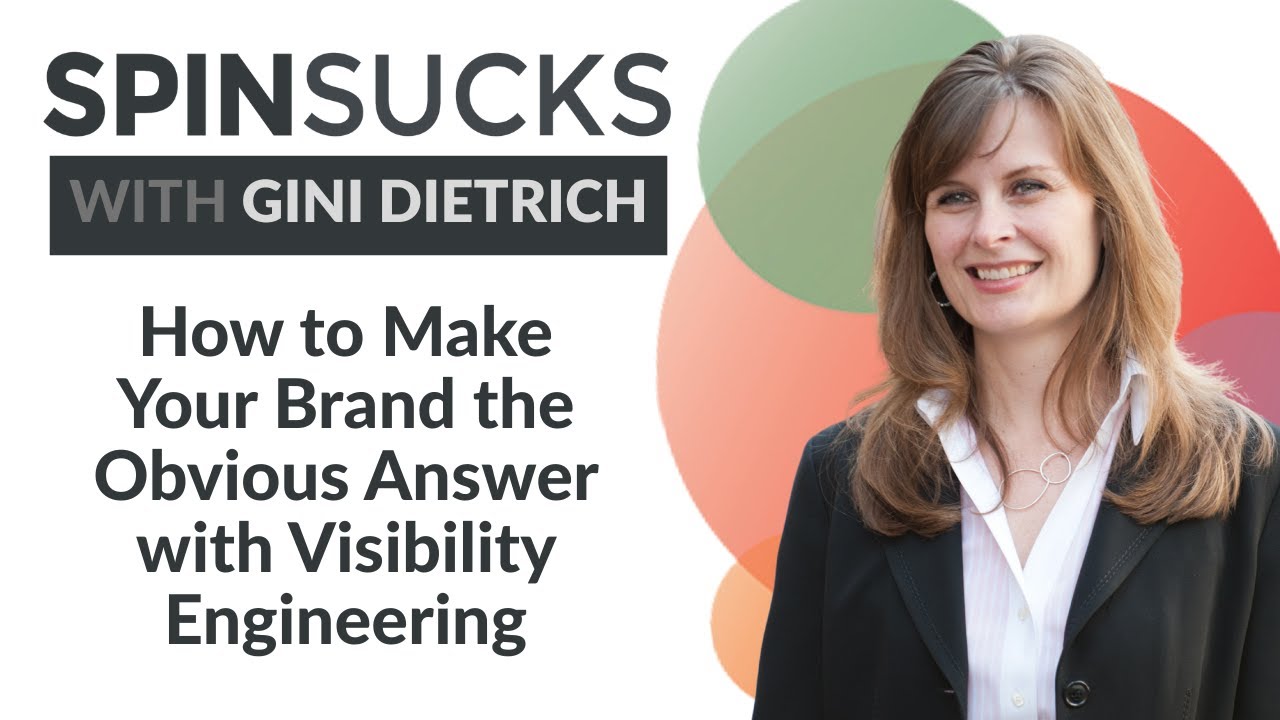
How to Make Your Brand the Obvious Answer with Visibility Engineering
If you’re new-ish to the business world, this won’t shock you. But back in the day, the primary way someone learned about your brand was through your sales team.
Today? We all have supercomputers in our pockets.
By the time a buyer meets your sales rep—or an AI summarizes your category—their decision is mostly made. The shortlist is formed. The obvious answers are already in the room.
That’s why so many companies are shrinking sales headcount and reinvesting those dollars in digital marketing. And it’s why the work you and I do now is so important.
But there is a catch.
If your brand isn’t respected in the pre-pipeline moments—the activities leading up to your sales team picking up the phone—you won’t get a response, let alone a demo. You get polite ghosting and a wide-open calendar.
We used to treat this as a top-of-funnel problem: publish more, rank higher, pray harder.
In an AI-shaped market, volume doesn’t win. Signals win. Corroboration wins.
The brands that show up—consistently—are the ones with evidence people can lift, quotes analysts can reuse, and definitions machines can safely parrot without getting yelled at by the internet.
This isn’t “content marketing” anymore. We’ve moved into visibility engineering.
Think about how real buyers buy. Think about how you buy.
You Google (yes, still). You read reviews. You ask an AI for a recommendation. You bounce to YouTube or TikTok for a quick explainer. You skim an analyst note (if the purchase warrants it). Maybe you DM a peer for the “what’s it really like?” take.
We talked last week about the collapsed funnel—this is what it looks like in the wild.
There is good news, though!
You can engineer this.
Marketing and communications matter more now than ever. You don’t need 200 blog posts. You don’t need to be everywhere. You don’t need to go viral.
You need a small set of anchor pages that function like an evidence library—clear definitions, points of view from credible subject matter experts, data or original research points, quotes from external experts, and assets that analysts, journalists, and AI systems can easily cite.
Then you turn the PESO Model© crank: owned to prove, earned to corroborate, shared to simplify, and paid to scale what’s already working.
And you measure the few things that actually influence pipeline and funding. Because in this market, if you aren’t cited, you aren’t considered.
Visibility Engineering 101
We’ve talked about visibility engineering quite a bit in the second half of this year. That’s because we now know that the large language models get most of their content from owned and earned media.
In fact, Muck Rack just added more data to their “What Is AI Reading?” research and found they’re citing LinkedIn, Wikipedia, and news releases.
Nearly half (46%) of AI citations on LinkedIn come from articles, not posts. Forty-two percent of AI citations on Wikipedia link to pages about processes and technologies, not brand pages. And AI overwhelmingly cites GlobalNewswire (61%) news releases.
Those things are, of course, earned and owned media.
Great!
Now let’s think about how we might use that to engineer our visibility in AI search, along with using shared media to reach our audiences and paid to get in front of new ones.
Here’s the simple way to work this, step by step.
Prove it with Owned
Just like in a fully integrated PESO Model© program, you want to start with owned. This will allow you to prove your expertise to both humans, the traditional bots, and the LLMs, too.
You want to treat your website as the source of truth. And then you’ll use places like LinkedIn and Wikipedia as your satellite references.
In the 2026 version of the PESO Model Certification© (coming very, very soon!), we spend a lot of time working on visibility engineering. And we expand beyond the content map to a content ecosystem.
The content ecosystem starts with anchor hubs published on your website and then you use those pages to repurpose into LinkedIn Articles (and others) that point back to those anchors.
Right now, your anchor hubs should be written. The LLMs aren’t scraping video or audio (yet) so you’ll have to spend some time on the written word. As you do that work, make sure you’re writing for discoverability, which means how-it-works type content.
You want to make sure your anchor hubs are the very best pages on the internet for your topic.
Corroborate it with Earned
Whether or not news releases are dead has long been debated, but one thing is for sure: newswires are accelerating your visibility in AI answers.
If you want to engineer that visibility, you should use newswires as accelerants, not endpoints.
Issue a release only after your anchor hub is live, and link the release to it. That way, anyone who picks up your release will point to the page you control, AND it will also train the LLMs far beyond your release.
Next, think about analysts and trade reporters. We always love to get the big, tier one placements, of course, but pitching analysts and trade reporters will extend your reach further with the LLMs.
Simplify it with Shared
Now you can take your anchor hub and your media coverage and package it all into snackable sizes.
Things such as a one-slide chart, a 100-word methods blurb, a “Key Findings” box, and a 60–90 second explainer.
From there, make sure to add LinkedIn articles to your toolbox since we now know the LLMs prioritize that over posts. And, on YouTube/TikTok, demo the method visually (“Here’s how we calculated ___ in under a minute”).
Caption it clearly and include the source line in the description.
Use Paid to Scale
Finally, use paid to scale what’s already working.
Do not boost everything. You want to put some dollars behind the highest engaged content—owned, earned, and organic shared. This will help the LLMs see all of the emphasis you’ve put on trust and credibility.
Aim your spend where it nudges reuse: analysts’ newsletters, practitioner communities, and remarketing to people who engaged with your social media efforts.
I’m not talking a huge budget, either. You can spend $50 or $50,000. As long as you’re amplifying what’s already working, the spend won’t matter.
Treat paid media as the distribution plan for your best evidence, not as life support for weak content.
With the signals stack in place, the next move is to build your evidence library, which is exactly what we’ll discuss after the break. I’ll be right back!
Engineer Your Evidence Library
What the heck is an evidence library, you ask?
It’s probably what you assume. It’s a set of anchor hubs that function like reference entries: grown-up definitions, transparent methods, clean visuals, and copy-and-pastable findings. Things that demonstrate exactly how things work (without giving away confidential information).
The goal is to be the place people (and AI) quote. Your job is not to publish more; it’s to create, in essence, a reference shelf for all your expertise (using the collective ‘you’ to describe all the experts within your organization).
Start with one anchor hub. It should be one topic that frames the problem, defines the terms, shows your method, and publishes outcomes AI can safely reuse.
What an Anchor Hub Includes
So what does an anchor hub include?
It’s an evolution of what we used to call pillar content or cornerstone content. If you already have those pages on your website, you’re well ahead of the game. You’ll just make some tweaks and refresh some content.
For those of you who don’t, an anchor hub should include:
An Introductory Paragraph
An introductory paragraph (150-250 words) that describes the pain in plain English. Put that bad boy at the top of your page. This is what humans and LLMs will use to learn all about how you help to solve this particular problem.
This might be the TL;DR summaries you see at the top of lots of stories now (including at the top of our blog posts). Some of them could be a list of bullet points, while others might just be a summary paragraph. Entirely up to you!
Define Your Solution
Then you want one or two sentences that define your solution. This is something that can be copied and pasted, and you’d be OK with it sitting in an article or analyst brief all on its own, without additional context.
For instance, the PESO Model® is an integrated marketing and communications framework that orchestrates paid, earned, shared, and owned media to build authority, generate demand, and prove results. Used as a marketing operating system, PESO aligns messages, timing, and metrics across channels, allowing programs to compound instead of compete.
Describe Your Method
From there, write 100 words to describe your method. By this, I mean how you know. Is there data to support your solution?
For instance, this guide reflects the PESO Model as created by Spin Sucks (2014) and refined through more than a decade of implementations across startups and global enterprises.
I won’t share the entire paragraph, but you can use phrases such as “we combine,” “our approach,” or “we iterate.”
Include Some Findings
Next, you want to include some findings, either from your original research (if you have it) or from industry reports.
Include at least three stats and include caveats. Spell out the sample (n), timeframe, how you calculated it, and any limits. Make each stat copy-pasteable in one line.
So, for example, “anchor hub pages built with the PESO Model earned 2.6× more neutral AI citations within 90 days.”
What it Means
Next, in three to five sentences, you’ll describe what this all means.
You’ll translate your stats into practical implications for the reader: what the numbers suggest, what they should prioritize on this topic, the conditions where the result holds (and where it doesn’t), and the immediate next step.
For example, on the PESO Model page, I have, “If your goal is to be cited by analysts and surfaced in AI summaries, don’t publish more posts—tighten this PESO anchor. Link to this page when you need a neutral reference.”
Think about it as instructions for your reader, no matter if it’s a human or a bot.
Frequently Asked Questions
From there, you’ll have a section on the page dedicated to FAQs. We’re working on a new website and have included an FAQ section in the modules so we can drop that section into any page. It’s quite glorious!
Start with five to seven questions, each answered in one to three sentences (no more!). Lead with the plain English answer, don’t use jargon, and then add one proofy detail or link.
Add Some References
List neutral, topic-relevant sources that corroborate your definitions, methods, or stats.
This might be industry research, university publications, quotes from earned media efforts, your original research, and/or quotes from user-generated content.
Use the source’s exact page title as the anchor text, and prioritize universities, standards bodies, associations, and reputable trade publications.
Keep this list short (3–7), update it quarterly, and use consistent citation style. These links tell the LLMs that you’re not full of baloney.
Include Some Downloads
Make your proof portable. Offer one-click files so editors, analysts, and internal champions can reuse your work without the need for email back-and-forth.
Some examples of downloads might be:
- One-Slide Chart (PNG & SVG)
- Data Table (CSV)
- Methods (TXT, ~100 words)
- Executive Brief (PDF, 1 page)
- FAQ Pack (DOCX)
- Images
Create an Author Box
Most website pages don’t have a spot for an author box like blog posts do, so you can just include a sentence or two at the bottom about your subject matter expert.
The Anchor Hub Outline
That’s it! It seems like a lot, but it’s just 11 sections for the pages you deem anchor hubs.
Below is an outline of what to include on your anchor hub pages. Go ahead and copy and paste it and drop it into a doc so you have it as you outline your first anchor hub.
- H1: What Is [Topic]? Definition, Method, Benchmarks, and Outcomes
- TL;DR (75–100 words, canonical summary)
- Problem Frame (context + stakes)
- Definition (1–2 sentences)
- Method (100 words)
- Findings (3 stats + one chart)
- What It Means (bullets)
- FAQ (5–7 Qs)
- References (neutral domains)
- Downloads (chart PNG/SVG, CSV, brief)
- Author box (SME with credentials + media/analyst links)
Visibility Engineering Makes Your Brand the Obvious Answer
Pre-pipeline is where the decision happens—and most of it happens without you. Your job isn’t to flood the internet with more words; it’s to become the page people and machines trust when they need a clean definition, a credible method, and a chart they can drop into a deck today.
That’s visibility engineering.
And the PESO Model is how you operationalize it: owned to prove, earned to corroborate, shared to simplify, and paid to scale what’s already working.
Start small and concrete.
This week, pick two anchor topics buyers (and AIs) already ask about.
Write the definition you’d be proud to see quoted, a 100-word method, and ship one clean chart with a source line. Add three neutral references, a tight FAQ, and your author box.
Then, brief one analyst or trade editor and package a LinkedIn Article that points back to the hub.
Measure reuse—are you showing up in AI answers?—not pageviews.
If you do nothing else, do this: tighten one anchor until it’s the safest thing to cite. Everything good (media, invites, pipeline, hires) compounds from there.
Because in this market, if you aren’t cited, you aren’t considered. Let’s make you the obvious answer.
© 2025 Spin Sucks. All rights reserved. The PESO Model is a registered trademark of Spin Sucks.
Share This: